Dandelion
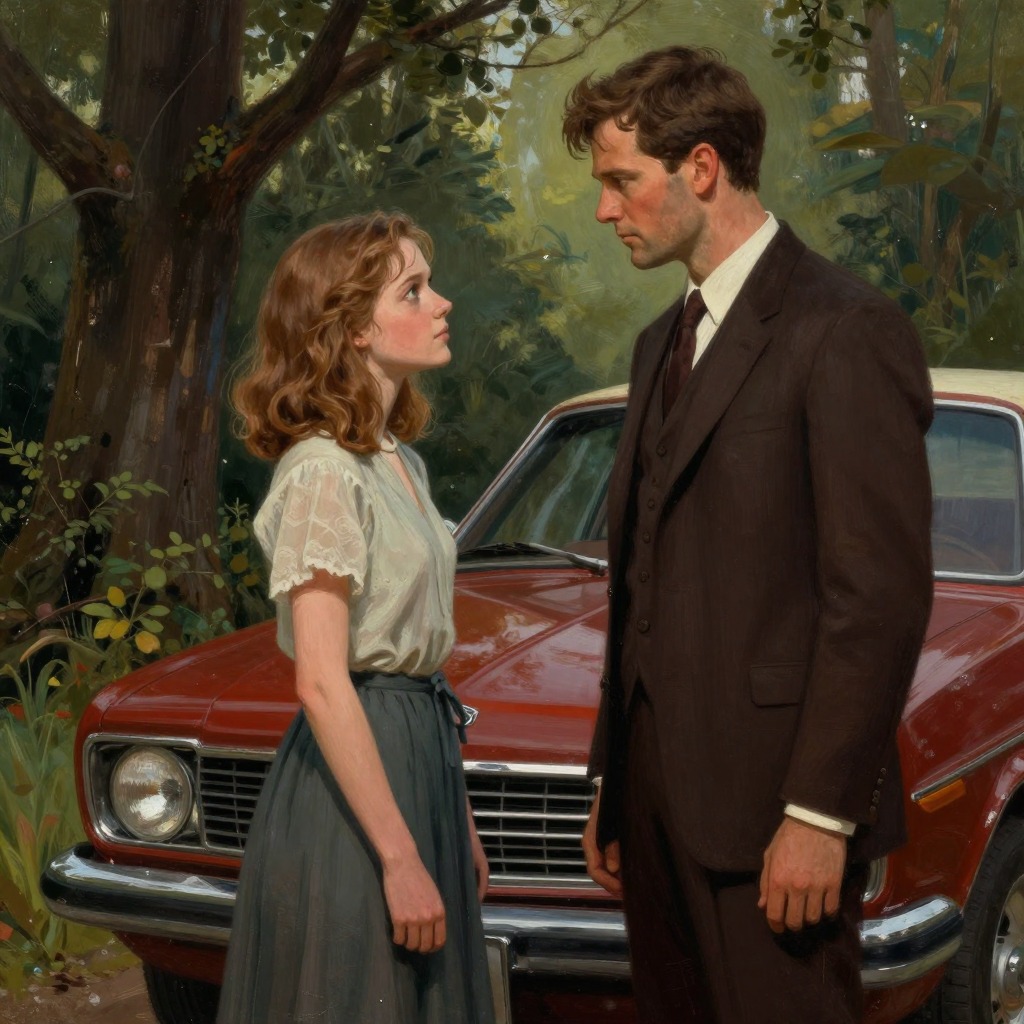
The dandelion appears only once as a physical object in the novel, but its brief presence carries a disproportionate weight. On a late afternoon after rain, Clarisse McClellan finds what she calls "the last of the dandelions this year" on the lawn and brings it to Montag. She explains the folk ritual: rubbing the flower under the chin; if the yellow pollen rubs off, it means the person is in love. She tests herself first, and Montag confirms she is "yellow under there." Then, before he can move, she puts the dandelion under his chin, peers at the result, and frowns. "What a shame," she says. "You're not in love with anyone." Montag protests, insisting "I am very much in love!" but when he tries to conjure a face to fit the words, there is no face. He blames the dandelion, claiming she has used it all up on herself. Clarisse, seeing she has upset him, apologizes and leaves. The dandelion test, a child's game, exposes a truth Montag cannot yet fully admit to himself: his marriage to Mildred is a hollow shell, and the love he claims to feel is an abstraction without a referent.
The Dandelion as a Diagnostic Tool
The dandelion's function is diagnostic, not magical. It does not create the truth it reveals; it merely makes visible what already exists. Clarisse's use of the flower is a piece of folk wisdom, a remnant of a more connected, intuitive way of knowing that her family preserves. The test's failure on Montag is not a supernatural judgment but a physical fact: the pollen does not transfer because the emotional condition it signals is absent. Montag's immediate, defensive reaction—blaming the flower, insisting he is in love, trying to summon a face—reveals the depth of his self-deception. He knows, on some level, that the dandelion has told the truth. Later, lying in bed after Mildred's overdose, the memory of the dandelion returns to him with bitter clarity. He thinks, "And that awful flower the other day, the dandelion! It had summed up everything, hadn't it? 'What a shame! You're not in love with anyone!' And why not?" The dandelion becomes a shorthand for the emotional void he is only beginning to recognize.
Contrast with the Mechanical Hound and the Seashell Radios
The dandelion stands in stark opposition to the dominant technologies of Montag's world. The Mechanical Hound, with its "sensitive capillary hairs in the nylon-brushed nostrils" and its ability to track chemical balances, represents a society that has perfected the measurement of the physical but has no instruments for the emotional. The Seashell Radios, which fill Mildred's ears with an "electronic ocean of sound," are designed to drown out the very silence in which genuine feeling might arise. The dandelion, by contrast, is a natural, low-tech, and communal object. It requires no electricity, no broadcast, no audience. It is a tool for interpersonal connection, not for isolation. Its failure on Montag is not a failure of the flower but a failure of the man and his world. The dandelion's brief appearance, and the truth it reveals, is a quiet indictment of a civilization that has replaced the subtle language of the heart with the deafening noise of the "parlour walls."
The Dandelion's Thematic Resonance
The dandelion's role extends beyond the single scene. It is part of a pattern of natural objects—autumn leaves, chestnuts, rain, the moon—that Clarisse uses to reawaken Montag's dormant senses. She asks him if he has ever smelled old leaves, if he has looked at the moon, if he has tasted rain. Each of these encounters is a small act of defamiliarization, a way of making the familiar strange again. The dandelion is the most pointed of these tests because it directly addresses the question of love. When Montag later thinks of the dandelion, he connects it to the wall between himself and Mildred—not just one wall, but three, the expensive "parlour walls" that have replaced genuine intimacy with a simulated family. The dandelion's verdict is not just about Montag's feelings for Mildred; it is about the entire structure of a society that has made authentic love nearly impossible. The flower's yellow stain, or its absence, becomes a symbol of the emotional poverty that the novel's protagonist must overcome if he is to become fully human.